
HP Elitedesk 800 G1 SFF - w/ ~29*TB raw storage
An odyssey on adding nearly 30TB of storage to a small form factor computer.

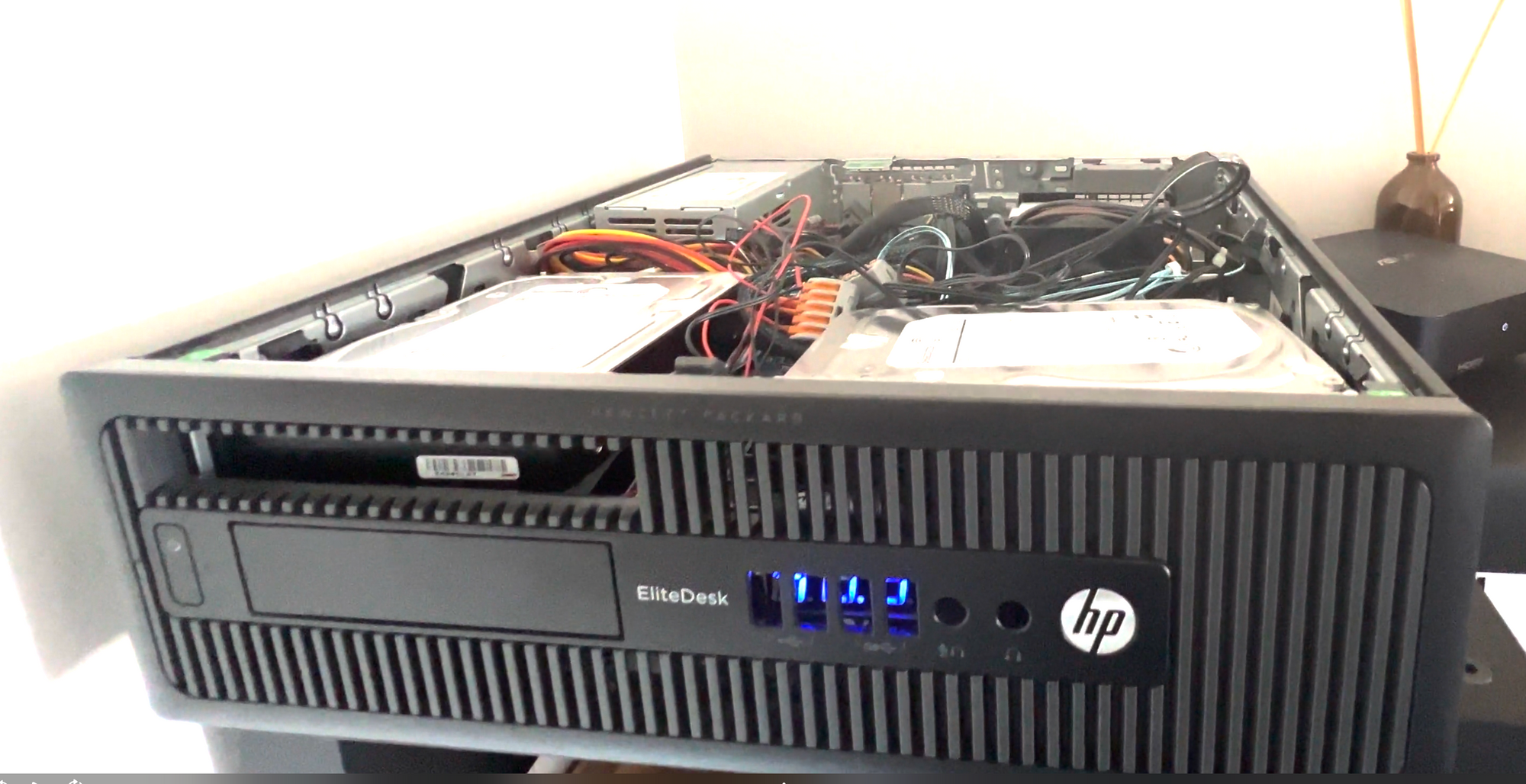
For a very long time, all my home services have ran inside an old ASUS i5 mini PC (6th gen). It had it's share of upgrades - 512GB SSD and maxed out to 16GB RAM.
My quest for a NAS solution for self hosting has brought me to a fun project.
Requirements:
- Small form factor
- Silent/low power
- i5 4th gen or better
- Meant for a Proxmox node, so, 32GB RAM were mandatory
- whatever i do to it, the chassis will be closed and tidy on the outside
I ended up with an Elitedesk 800, 1st gen, which fitted all of these requirements quite nice. Costed 50€, including 8GB RAM and a 500GB spinning rust. I ended up selling that RAM for 15€ since i had 2x 16GB sticks around.
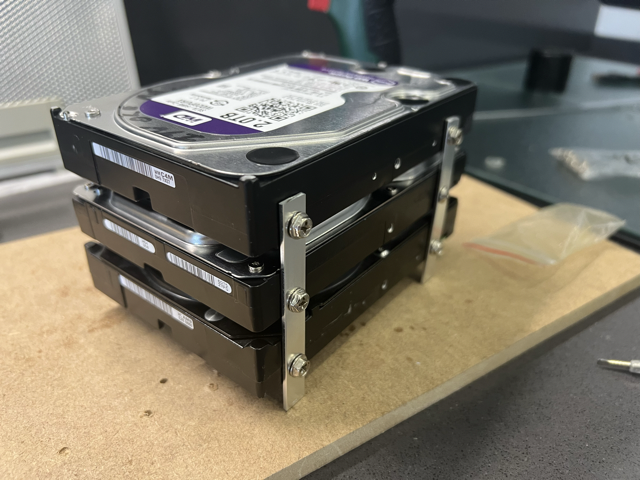
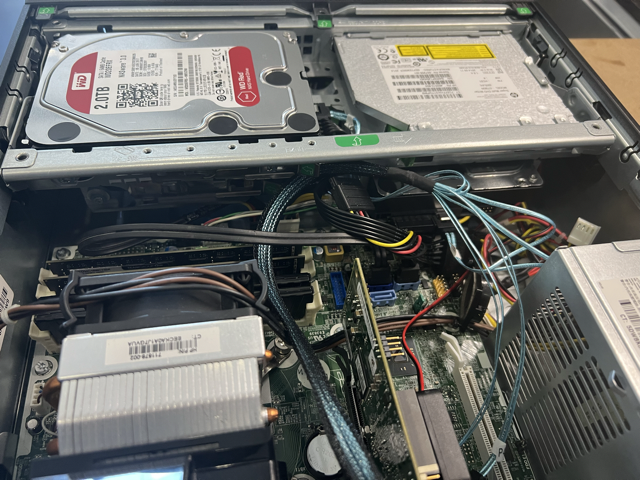
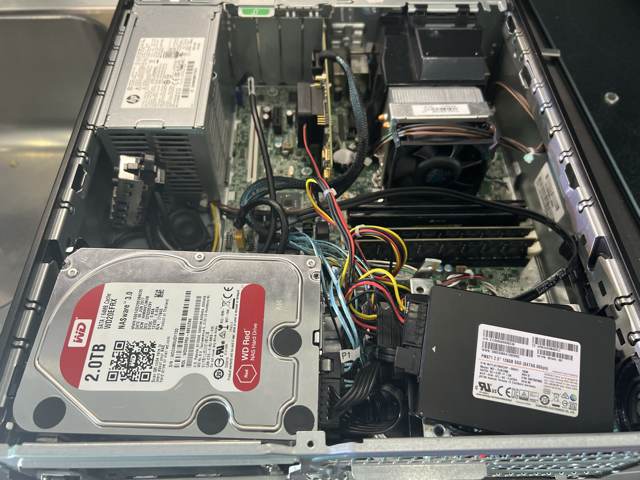
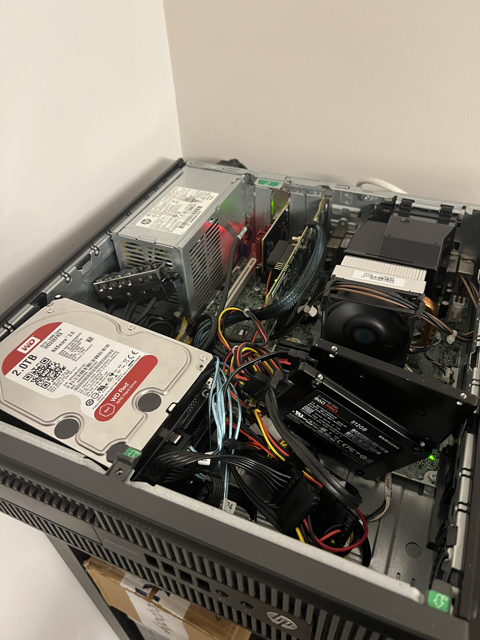
These have a single slim DVD drive, and space for 1x 5 1/4", 1x 3.5" and 1x 2.5". But my initial requirements were for 2x 2TB WD Red (mirrored) and a 2TB Purple which i bought for 25€ for downloads. Space inside is very limited, so most things needed to be stripped out.
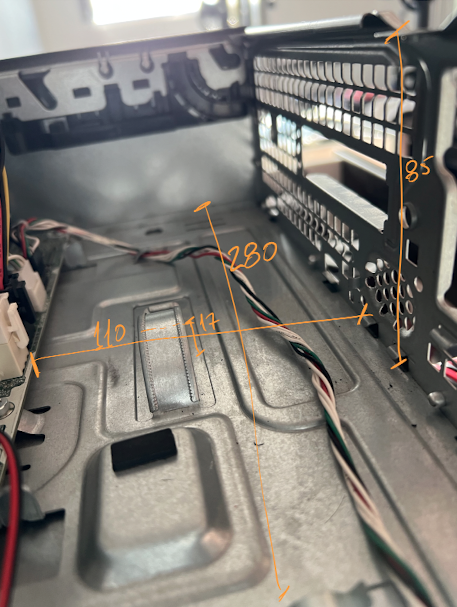
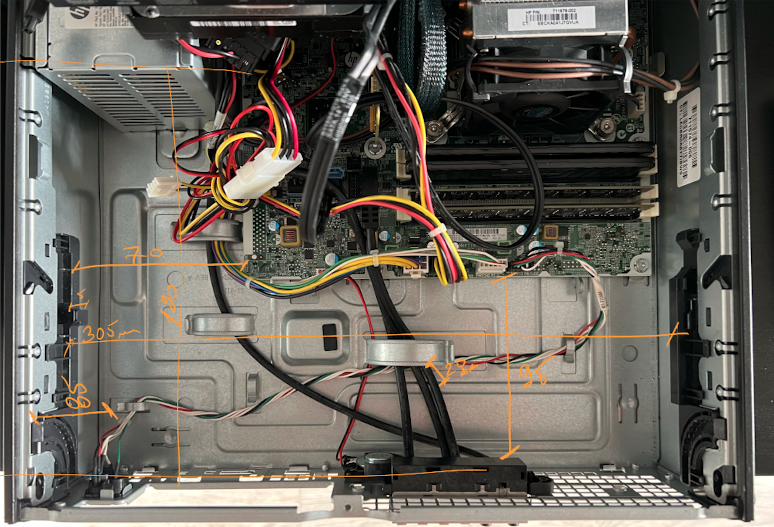
I figure i could install some drives inside with some space to spare. Here are some measurements.
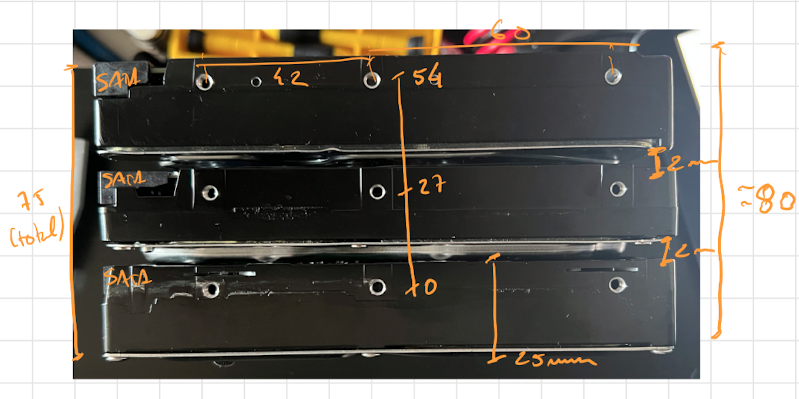
Forgot about the HBA!
This is a setup meant for TrueNAS running on top of Proxmox. Purchased a server HBA Lsi SAS9220-8i which i proceeded to upgrade with IT firmware. This was way more challenging than i planned to.
Despite these burn around 10W, they do run hot. Too hot for my taste. So i added a little 5V fan.
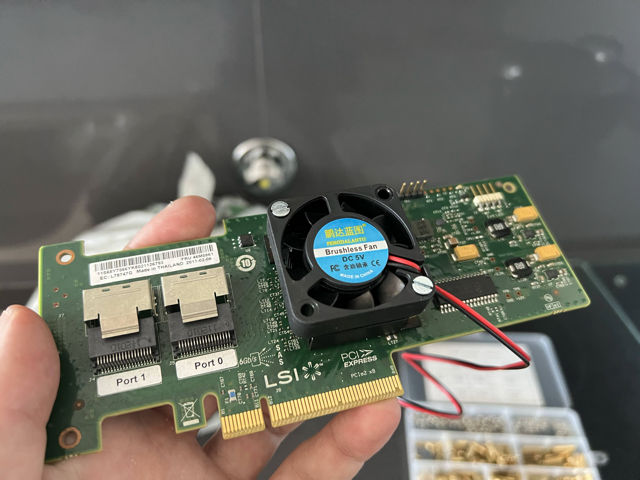
And i was happy. For a couple of weeks: it's kind of incredible how quickly these feel slow and... well, more space is needed.
I came across 6TB Seagate SAS drives on ebay and got 5 of those. Goal? Stripped mirror with a cold spare since these were used. I ended up paying 220€ for all of those drives with had around 30k hours of runtime. Not cheap but with free returns in case something went bad (and from Germany, reputable seller).
I ended up rewiring the whole thing and tested these out via a LONG S.M.A.R.T. test that lasted all night.
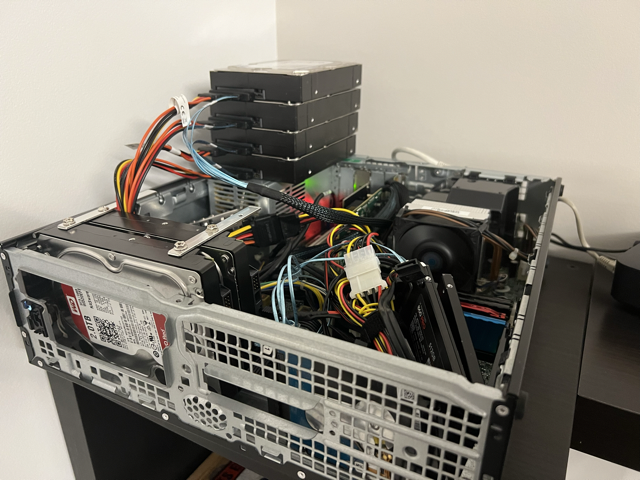
The other morning, i tried to held one of this. I instantly burned my fingers - they were quite hot, given the lack of air circulation. I heard this ran hot, but it's too hot.
Time to think about placement. My HDD raiser (TM) was meant for 4 drives, side by side. Space is limited so they need to be parallel to the base of the unit. But cabling was too tight and added even more uncomfort.
I considered inclining them to the front side, some corks for isolation between drives, and adding a couple of 60mm fans from the fan. Now i have 2 + 2 drives with ~20mm separating them, and fans blowing air.
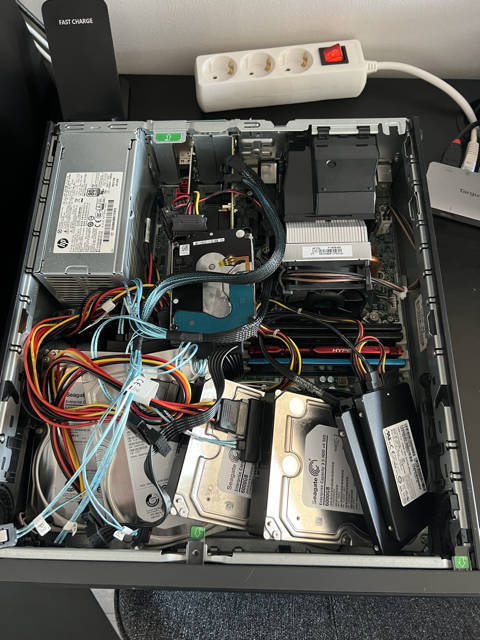
How does it look before adding fans?
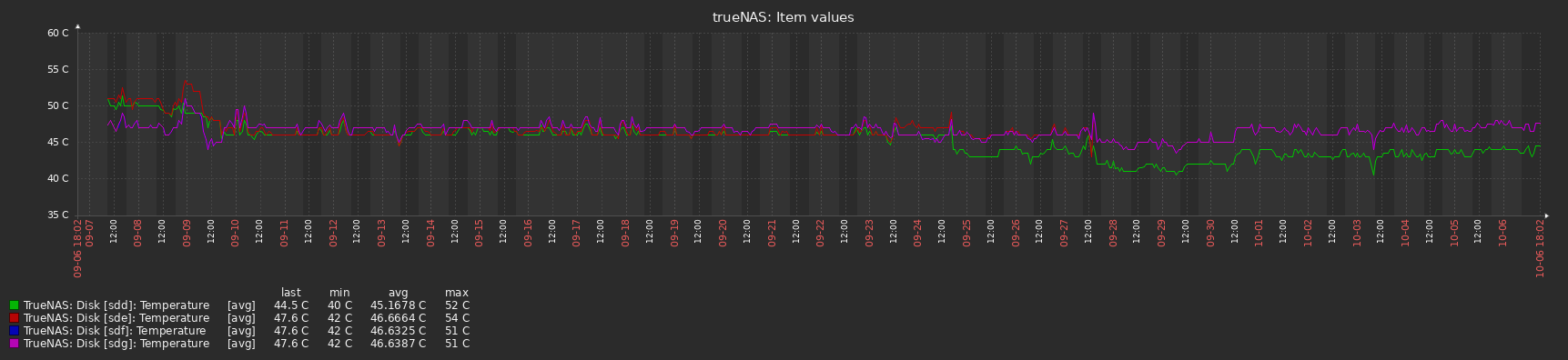
Temperatures inside: you can see the drop when i added the first fan, then the second (graphic: Zabbix; for some reason it's not graphing two of the drives)
How did it ended up looking? (🔊 for maximum effect)
That small temperature display is a simple thermometer from ebay which ended up costing 3€. Power comes from one of the SATA power connections, which i took ground and +5V to two WAGO connectors - from there i can feed fans and the thermometer.
Temperature hasn't rose above 42º (sensor is between two drives, ambient sensor hovers around 24º since it's early autumn). It's not fully silent but it's on a spare bedroom.
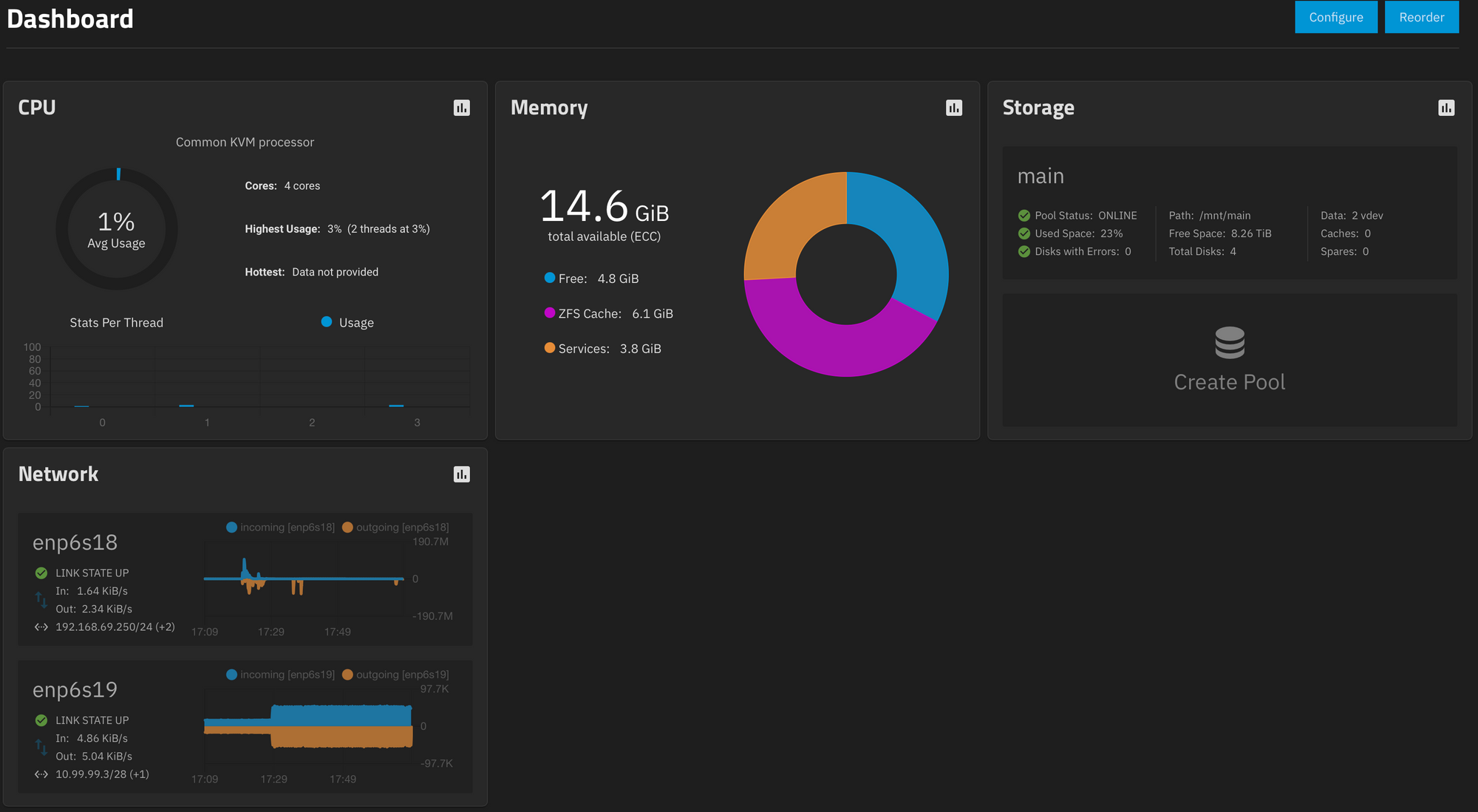
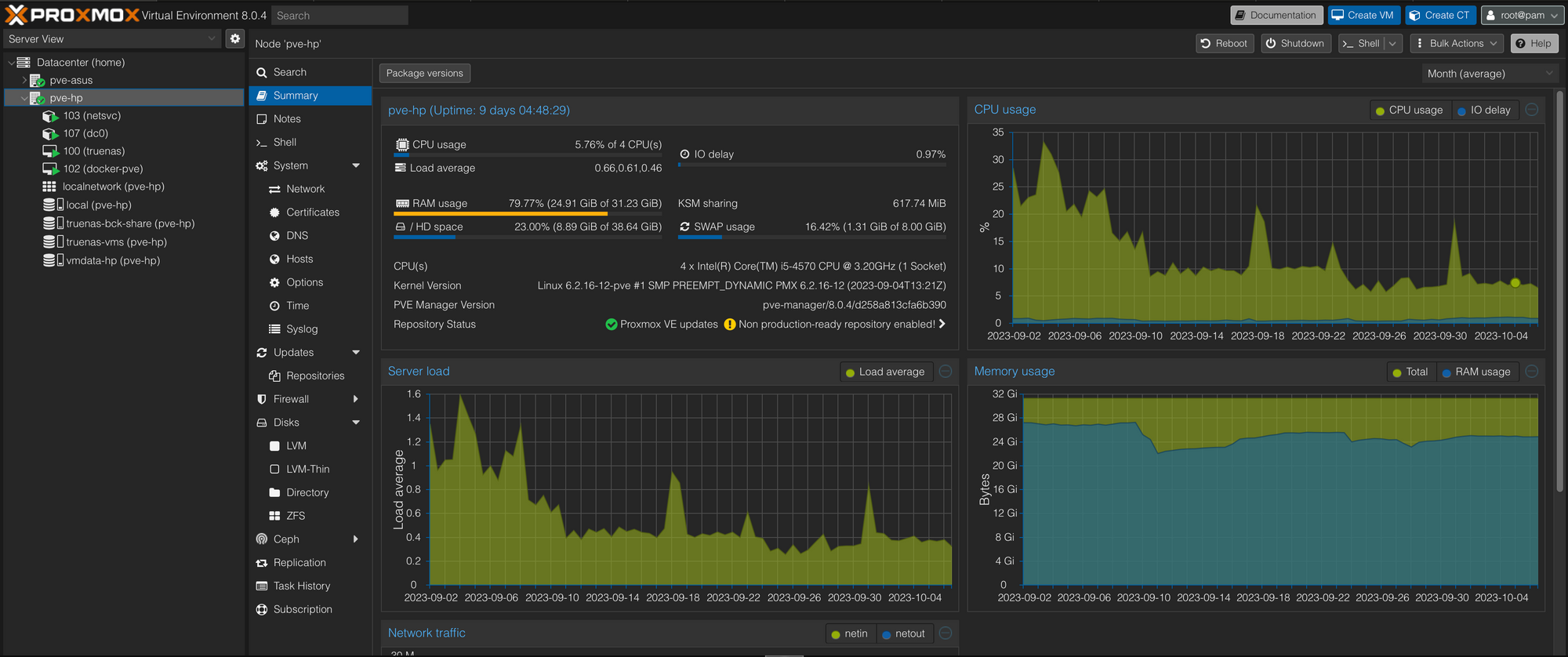
The same node, besided TrueNAS (with offsite replication of a few important shares), runs,
- Docker VM
- Arr stack (radarr, sonarr, jellyseer, ...)
- Greenbone vulnerability scanner
- Transmission torrent downloader
- LXC - SAMBA Domain controller (running SAMBA 4 with a whooping 180MB of RAM)
- LXC - Pi-hole + Unifi controller
- immich.app (google photos self hosted solution - get to know it!)
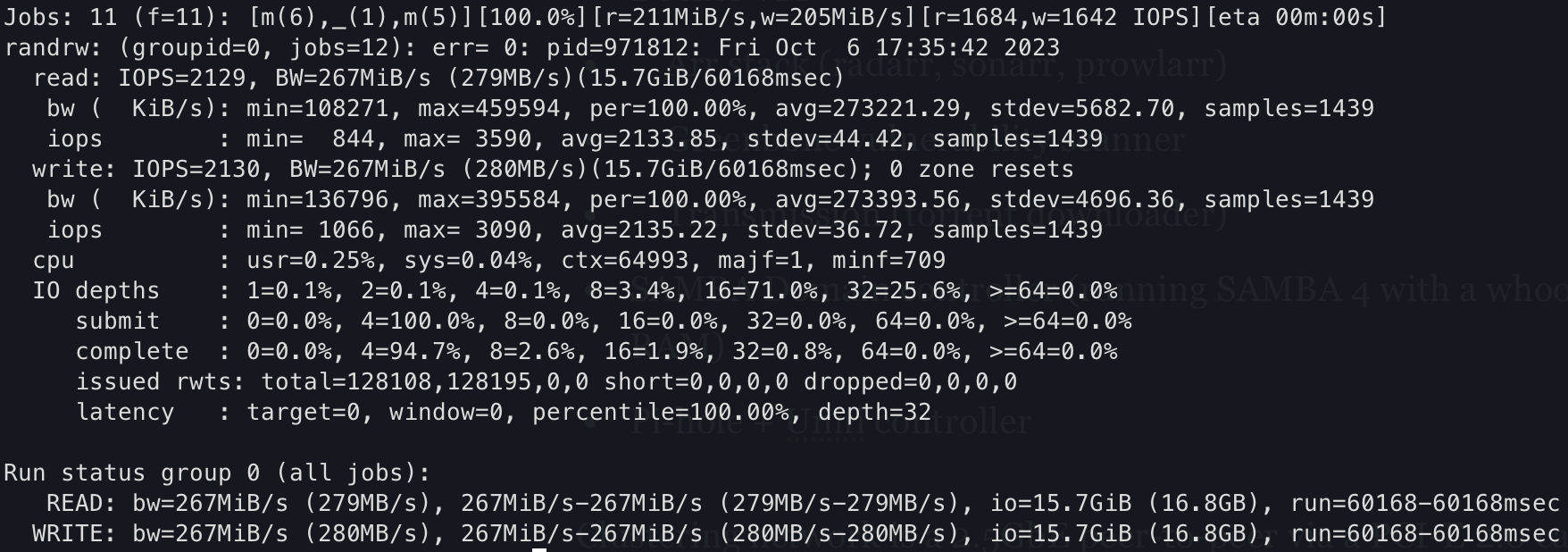
Clustering network is a 2.5GbE peer-to-peer via a PCI-E 2.0 card, and a USB3.0 dongle on the Asus mini-pc. This also takes advantage of the ~2.1Gbps performance for these drives (again, stripped mirror):
Closing thoughts:
- It works!
- It's quiet
- I can easily replace these drives with 20TB ones if i had to, for a total of 80TB of storage, with zero changes to the setup (RAM might not be enough for ZFS to do it's thing). But i'm cheap and i don't need that much storage
- It isn't too hot or loud - survived the summer
- can't put it upright - but i never wanted to!
Todo: cleaning up cables inside a bit more. Probably won't be doing it because i'm lazy.
Not too shabby!